| 'Matching features' is a common task in the Reading test and is used with texts which contain opinions, theories or facts about different people. This type of question requires the student to match an opinion, theory or fact with a person or people. |
|
| Although matching features tasks are often about a person, they can also be about a place, year or thing. |
|
03. Skim read the text to identify the main ideas.
|
|
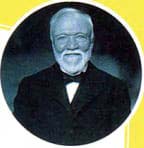 Andrew Carnegie was one of the wealthiest businessmen of the 19th century. Mostly self-taught, he started his career as a messenger boy and telegraph operator. By 1889, however, he had become the proud owner of Carnegie Steel Corporation, the largest company of its kind. Famous not only for his success and wealth, he was equally well known for his generous contribution to society. During the last 18 years of his life, it is estimated that he donated roughly $350 million to charities, foundations and universities.
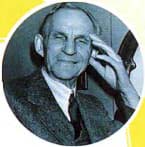 Another success story of the 19th and 20th centuries was the founder of the Ford Motor Company, Henry Ford. Responsible for manufacturing an automobile which could be afforded by the masses, he made a significant impact on society and became incredibly wealthy. Primarily, his success was achieved by using the 'assembly line'* to manufacture his cars. Before this, employees of other manufacturers would work in groups to build one car at a time. The moving assembly line meant that each individual was responsible for a specific job. This division of work allowed cars to be produced more quickly and efficiently. With the addition of the world's first automatic conveyor belt*, it is estimated that Henry Ford's factory was soon producing a car every 93 minutes.
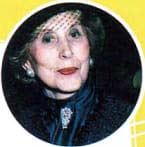 Estee Lauder started her own beauty company in 1946. Her business, which includes product lines such as Estee Lauder, MAC Cosmetics and Clinique, has had incredible success. Born in Queens, New York, in 1908, she started her first beauty company with a skin cream developed by her uncle - a chemist by profession. Recognised as an innovative businesswoman, Lauder became one of the richest self-made women in the world. She believed her success came from producing high-quality products and focusing on excellent customer service.
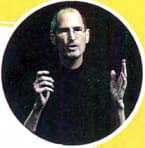 Steve Jobs made his fortune by creating some of the most popular products of all time. Born in 1955 in San Francisco, California, Jobs co-founded Apple Computer with Steve Wozniak in 1976, when Jobs was just 21. The project started in the family garage and together they revolutionised the computer industry with products such as the iPod, iPhone, iPad and Mac.
|
- a line of machines and workers in a factory that a product moves along while it is being built or produced
- a continuously moving piece of rubber or metal used to transport objects from one place to another |
04. Make notes about the main ideas in each paragraph and discuss them with a partner. Did you focus on the same points?
A Andrew Carnegie
B Henry Ford
C Estee Lauder
D Steve Jobs
|
05. Is the text mainly factual, theoretical or opinion-based?
|
| Identifying whether the text is mainly factual, theoretical or opinion-based will help you understand the question better and decide what type of information you are looking for. |
|
06. Read these statements connected to the text and write the key words in each.
|
|
1. established a fast and economical way to produce a popular product
2. started their first company with a family member
3. began by inventing products at home
4. focused on creating first-rate items and looking after clients
5. a charitable entrepreneur, who gave a great deal of wealth away
|
07. Look back at the text and write down synonyms for key words in the statements. (Not every key word has a synonym in the text.)
1.
2.
3.
4.
5.
|
| When approaching this type of task, always try to look in the text for words or phrases which are similar to those in the question. The same words are rarely found in both the question and the text. |
|
|
Make sure your answer is based on the information in the text and not on your personal knowledge of the subject.
Be careful! Some of the people in the list could be distractors, you may not need to use all the letters, and the people mentioned may be used in several sections.
|
|
08. Look at the list of entrepreneurs. Match each statement from exercise 6 with the correct entrepreneur, A-D. (You may use any letter more than once.)
1. 2. 3. 4. 5.
|
|
A. Andrew Carnegie
B. Henry Ford
C. Estee Lauder
D. Steve Jobs
|
09. Read through these steps and put them in the correct order.
1. 2. 3. 4. 5. 6.
|
|
a. Decide if the text is mainly factual, opinion-based or theoretical.
b. Read the sentence before and after each option (e.g. list of names) in the passage and match the information to a statement.
c. Read all the instructions carefully.
d. Match a statement to a name/ option.
e. Skim read the whole passage to gain a general understanding.
f. Scan both the passage and question and identify:
- the options in the passage (e.g. the list of people)
- key words in the statements
- synonyms in the passage for words in the statements.
|
10. Skim read the passage 'Business ideas of the future' for a general understanding of what it is about.
|
|
The most successful entrepreneurs are those who predict the needs of the future earlier than the com petition. No new business start-up is without risk. but the benefits can be immeasurable. Inventions such as the automobile. the internet and the iPad were all initially met with a high degree of criticism, so it is important to maintain the belief that anything is possible! Below are just a few of the business ideas expected to be successful in the future.
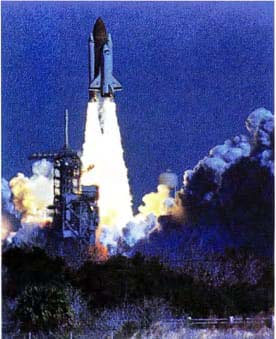 Travelling to space used to be possible only for governments or large aerospace companies. This is no longer the case. however, and several private companies have planned tourist missions into space which are going to take place in the next few years. Consulting firm Futron Corporation predict that the space tourism industry will be worth $1.3 billion and have more than 25,000 customers in the next five to ten years. Space tourism pioneer Peter Diamand is also predicts that space hotels are going to be big business, with companies from around the world already working on such projects. Not everyone, however, is as convinced about the prospect of space tourism. Jeffrey Jones, a member of the Center for Space Medicine at Baylor College. warns that even a short journey into space could cause serious health problems for tourists of average or poor health.
Another idea comes from a company in New Zealand called Martin Aircraft. They have produced the first commercially available jetpack. which they plan to start selling next year. initially, they will be sold to shops and cost approximately $150,000. The craft will work for short trips only approximately 30 minutes, and manage speeds of up to 74 kph and an altitude of9i4 m.TheCEO of the company, Peter Coker. notes that, as well as being used by the rich for pleasure, they could also be useful in search-and-rescue operations.
Growing meat in a laboratory is an idea which, understandably, appeals greatly to animal rights activists. Jason Matheny, founder of the not-for-profit company New Harvest. also feels that producing meat in this way would satisfy a growing global demand for meat. It would also be healthier, more energy-efficient and sustainable. The Dutch scientist Professor Post, who served up the world's first laboratory-grown beef burger, predicts that 'cultured meat' will mean the end of traditional cattle farming within decades. Tracey Hayes, the CEO of the Northern TerritoryCattlemen's Association in Australia, admits that although this technology could be damaging to the worldwide beef industry. it would not affect Australia, as cattle farming is a greatAustralian tradition.
According to a recent prediction made by the United Nations, in the future, 86% of people living in developed countries will live in cities. With this in mind, an idea called 'vertical farming' has emerged. Essentially, vertical farming comes from the belief that cities should not rely on rural areas for food but should grow their own crops by creating multi-storey, high-tech greenhouses. The idea for vertical farms came from the ecologist Dickson Despommier, who turned his knowledge of parasites* into a way of looking at cities.
Daniel Kluko of Green Spirit Farms predicts that software will be used to look after these multiple farms remotely. For example, an app on a smartphone or tablet will be able to handle the day-to-day care of crops. Kluko also believes that this use of technology will help to keep costs to a minimum, allowing vertical farms to compete with traditional farms.
|
| - a plant or animal that lives on or inside another plant or animal in order to get food |
11. Decide whether the text is mainly factual, theoretical or opinion-based.
|
12. Look at statements 1-5 and the list of people.
|
1. could be used to save lives.
2. could be harmful.
3. is best controlled using technology.
4. would fulfil a worldwide need.
5. could have a significant impact on an existing business.
A. Jeffrey Jones
B. Daniel Kluko
C. Peter Coker
D. Peter Diamandis
E. Jason Matheny
F. Professor Post
|
13. Scan the text and statements and identify:
|
1. the list of people in the text
Paragraph B:
Paragraph C:
Paragraph D:
Paragraph F:
2. the key words in the statements
3. synonyms in the text for words in the statements
|
|
Be careful of distractors. Do not
simply choose the name which is
nearest to the key information
you need to read the whole section
to locate the correct answer.
|
|
14. Match each statement with the correct person.
1. 2. 3. 4. 5.
|

Bình luận