A. Getting a job*
When I left school, I applied for1 jobs in different companies, and finally, after sending out lots
of CVs2 and having some interviews3, a small company employed me4. I didn’t earn a lot, but the
company gave me some training5, which was good.
Common mistakes
I had some training. (NOT I had a training.) You can also go on / do a training course [a period of organised help and advice, often in a different place] (NOT formation or stage).
B. Promotion
I worked hard and soon I was promoted [given a better job with more responsibility]. They also
gave me a good pay rise [more money]. It was really good experience [knowledge you get from doing
something such as a job], and when my boss left the company a few years later, they gave me an
important promotion [a move to a higher job in the company].
C. Resignation*
By my mid-twenties, I was getting a bit bored, and decided I wanted to work abroad [in another
country]. So, I quit my job [told the company I was leaving; syn resign] and started looking for jobs in the
UK. After a couple of months I got a job in London. At first I liked it, but …
* when you say officially you are leaving a job
D. Unemployment*
After six months, I got fed up with the job – and I think I was enjoying myself too much to work
very hard. Finally, the company sacked me [told me to leave the company; syn gave me the sack], and
after that I was unemployed [without a job; syn out of work] for two months. Finally I got a part-time
job [working only part of the day or week; opp full-time job] in the kitchen of a restaurant.
* when people do not have a job
Common mistakes
Claudio didn’t have a job. (NOT He didn’t have a work.)
E. Success and retirement*
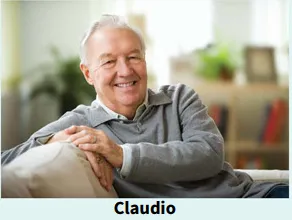 I loved the restaurant. I learned how to cook, and two
years later I became manager. Three years after that I
opened my own restaurant. [belonging to me / it was my
restaurant] It was very successful [it did well and made money],
and twenty years later, I owned five restaurants, and I was
the owner of two hotels. I believe anyone can succeed [be
successful] if they work hard enough – and have a little bit of
luck. Last year, aged sixty, I retired and went back to Italy.
I loved the restaurant. I learned how to cook, and two
years later I became manager. Three years after that I
opened my own restaurant. [belonging to me / it was my
restaurant] It was very successful [it did well and made money],
and twenty years later, I owned five restaurants, and I was
the owner of two hotels. I believe anyone can succeed [be
successful] if they work hard enough – and have a little bit of
luck. Last year, aged sixty, I retired and went back to Italy.
* the time when people stop work, often at 60 or 65
|

Bình luận